Tuesday, April 4, 2017

TBR Tuesday

Since I talk about books that I'm reading and/or have read already most of the time, I thought today I'd talk about some books that I would like to read. So here are some books that are currently on my TBR that I have not gotten around to reading quite yet:

1. Queen of the Clueless and Icon of the Indecisive by Mina V. Esguerra. These are the sequels to the first book, Interim Goddess of Love, which was recommended by Chachic. I kind of thought I'd read books like this before with humans-turned-goddesses, but it didn't go in the direction I expected and was super cute. The MC is also fairly sure of herself and has a super fun voice. But it was way too short! I need to read the sequels yesterday.


2. mitewacimowina: Indigenous Science Fiction and Speculative Storytelling by Neal Mcleod is an anthology of short science fiction written by Indigenous authors. It sounds fascinating, and I have yet to read any Indigenous sci-fi so I'm curious to see what it's like. It's also not a very popular genre as far as I can tell at the moment.


3. Monkey Beach by Eden Robinson. I've had this on my TBR list for awhile, but this review of Eden Robinson's work by a blogger I like further convinced me that I should read some of her work.


4. The Abominable Mr. Seabrook by Joe Ollman, which I found on one of 49thshelf's amazing lists. I love graphic novels, but what I love even MORE is graphic novel memoirs or biographies, which is what this is. It sounds so cool.


5. Unbuttoned by Christoper Dummitt, which is a history of a former prime minister of Canada, Mackenzie King, and his "secret life." He sounds like an interesting guy, so I would be interested to read more about him. (This book I also found via 49thshelf.)


6. Glass Beads by Dawn Dumont. I loved Nobody Cries at Bingo, so I'm definitely going to put her next book, out in April, on my TBR.


7. Some Kind of Happiness by Claire Legrand. I put this on my TBR after reading about it on Laura's blog, and now I keep hearing more and more good things about this author. Also it's MG, which I haven't read much of for awhile now, and I miss it!


8. The Long Way to a Small, Angry Planet by Becky Chambers. I think I saw someone recommend this on Tumblr, and they said it was unexpectedly amazing and had great characters, so since I love good characters, I was of course hooked.


 9. When Dimple Met Rishi by Sandhya Menon. This has been on my TBR since it was called something else, because I am a sucker for alternating POV romances. It comes out in May!


10. The Sidekicks by Will Kostakis. I loved The First Third, so I definitely want to read Will Kostakis' next book. I wasn't able to get my hands on this for awhile because I couldn't find a way to get it in Canada, but since it's being published in the U.S. I think I can find a way now!


So, these are just 10 of the books on my TBR. I have at least four and a half more pages of books I'd like to read, but I won't bore you by talking about all of them.

Which book should I read first? What books are on your TBR? 

Monday, March 27, 2017

Review: The Dhow House by Jean McNeil

Jean McNeil is one of those authors that can bring clarity to the human experience in a single, illuminating sentence.

She is also exceptionally good at place in her books, which I first experienced when I read Ice Diaries last year, about her experience in the Antarctic. It was a slower book to get through, but the writing was so elegant and her absolutely beautiful twists of phrase brought life into the setting. If you're going to send a writer to Antarctica, you definitely want to send one who is good at writing place, and Jean McNeil definitely is.


Because I enjoyed Ice Diaries, I looked forward to digging into her newest novel, The Dhow House (which I acquired through ECW Press's Shelf Monkey program), which as you can tell already from the title, also centres around a place.

If you like action-packed stories full of plot twists and turns, then this is definitely not the book for you. The plot is very straightforward, takes a long time to get to anywhere that interesting, and even when it does the conflict quickly dissipates and the plot slows once again.

However, the plot really isn't the point of this book. It's really the writing, the experience of the place, and the reflections of the characters in that place. Her writing creates a certain atmosphere, which I'm sure she does very intentionally. Throughout the first half of the book, through the slowness and the deep, rich description I felt wary and slightly creeped out, and couldn't really put my finger on how exactly she was creating this effect. There is definitely a lot more going on in this book than at the surface, and you really have to pay attention for those moments where she drops a particularly striking sentence that makes you stop and go, Whoa.

I have a deep appreciation for writers like Jean McNeil who so obviously love the work of stringing together words to evoke deep meanings, which not all writers have talent for. While the plot plodded along sleepily, the place and characters were very much alive.

The Dhow House comes out in Canada April 11. There is also a Goodreads giveaway that ends on March 31 if you'd like to enter to get an ARC!

Find it on:
Goodreads
Amazon.com
Amazon.ca
ECW Press

Tuesday, March 21, 2017

7 Lies I Believed About Writing

There are a lot of misconceptions and myths that float around about writing, and as a result I wrongly believed a lot of things about writing when I was younger. I was one of those kids who was always writing things and showing off scraps of everything to all my family and friends. When I was a kid, writing was easy and everyone told me I was fantastic so it was easier to believe ALL THE LIES. I have since learned the truth.

me actually writing feat. cat

Lie #1: You only write if you're inspired

I'd never heard the term Muse when I was a kid (and once I did I didn't understand it), but I knew: the way writing works is you are INSPIRED by whatever, usually nature because that's artsy (rain if you want to be even more artsy) and then you would write based on that inspiration.


The Truth: If you wait for the passionate winds of inspiration to sweep you up, you will hardly ever write, and you'll constantly be wondering why Inspiration or the Muse or the Universe or whatever hates you so much.

Lie #2: Only write if you feel like it

When I was younger, I basically only wrote when I felt like it, which happened to be a lot since writing was a fun thing to do with no pressure and I didn't have anything better to do because I was a kid. Since I was able to feel like writing all the time, I thought that was how it worked - you wrote because you felt like it, and if you didn't feel like it that was a sign that you shouldn't write.


The Truth: When I got older and had things like school, work, and more school taking over my life, brain and energy, it turned out that I never felt like writing. As it turns out, you do have to write even when you don't feel like it, because that's the only way you'll get words on a page. (Shoot. I just realized I don't feel like writing right now. I should probably go do some writing...)


Lie #3: Writing is fun

When I was a kid, writing was basically always fun. Writing was a way to be silly, creative, and make use of all the weird things my imagination came up with.


The Truth: Writing is sometimes fun, but more often it's work. It takes sitting your butt in a chair, putting fingers to keyboard, and making some word vomit. And sometimes it's grueling and awful and it sucks, but then it's been an hour and you've got 500 words!

Lie #4: If writing feels like work, you need to stop

Related to believing that writing is always fun, I thought that if writing ever started to feel more like work and less like fun, then I shouldn't be doing it anymore. If I was planning to do this as a career, I needed to love it with an all consuming passion! And something feeling like work means I don't love it!


The Truth: Whether or not you plan to pursue writing as a career, you're never going to love writing all the time. Sometimes, writing is going to suck, and you're going to hate it, but that doesn't mean that you should never write again.


Lie #5: If you don't feel good about a draft, you should probably give up on it

Little Alyssa had no concept of rewrites or constructive criticism. I just write stuff, she thought, and then everyone lavishes praise on me! So it must be good! If I don't like something I wrote, I should just rip it up or hide it deep in a drawer where it can't embarrass me anymore.

The Truth: First drafts suck. That's what they are made for: to suck. But then you actually have something to work with, to shape into something that hopefully resembles whatever amazing piece of art you were imagining in your head, with help from some friends along the way.

Lie #6: You have to wait for inspiration to come to you

The main conflict of your story? How to get from point A to point B? Your characters' motivations for their actions? That will all magically just come to you via the winds of inspiration, because you are a magical writing goddess who summons ideas and solutions to writing problems wherever you go. You'll just be out on a walk, or driving your car, and then it will just hit you and everything will fall into place, like in an episode of Jane the Virgin.


The Truth: Inspiration will sometimes come to you, but more often, you've got to just sit your butt down, and think. Yeah, I know, you've actually got to work on thinking through character motivations, scene transitions, and all that stuff, by asking yourself a million questions and coming up with a whole bunch of bad ideas in between soliciting advice from Twitter followers before landing on a good idea.

Lie #7:  You don't need to write every day

I thought, until recently, that you write when inspiration strikes, or when you feel like it, or when you find yourself on a writers' retreat in the middle of nowhere with no interruptions. Besides, you're strong. You don't need a SCHEDULE to keep yourself in line, you're so much BETTER than that.

The Truth: AGHHH I am still trying to pound this lie out of my head. I have made excuses for way too long for not committing to a regular writing routine, and it's landed me in a lot of trouble (like being in a writing slump for, say, two years). A regular writing routine/schedule is GOOD and NECESSARY and helps you GET THINGS DONE. Also, writing every day (or even just TRYING to write every day) helps a lot with flow, because I don't have to struggle to remember what the heck I was thinking when I was writing a scene three months ago.

What misconceptions have you had about writing? 

Monday, March 13, 2017

J.K. Rowling, Megan Whalen Turner and Authorial Intent
Recently, a very popular YA author wrote a lengthy post responding to some criticism that had come up regarding her most recent release. It's not the first time a YA author has defended their work, and it won't be the last, but it IRKS ME SO MUCH.

I understand the instinct to want to defend your work and your decisions, I really do. It's almost a basic human instinct to get defensive. But in my opinion, defending your choices against criticism doesn't make you look any better. When authors defend their work, as a reader that tells me that they don't really care about their readers  and what they think; all they care about is making sure that they cover their own behind.

It is the nature of publishing that once a book is out in the world, it isn't solely the author's anymore. Authors need to let go of their books, because by publishing their work they have already given it over to their readers. The author can't and shouldn't try to control response to it. By the time a book is out in the world, it doesn't matter what the author thinks or intended anymore. It matters what the readers think. To me, authors insisting on their interpretation as the only good and true interpretation demonstrates blatant disrespect for the readers, who are the reason they have a career in the first place.

It is amazing the difference in fan-author interaction and fan communities when the author doesn't insist on their own interpretation, either through defense of their choices or otherwise.

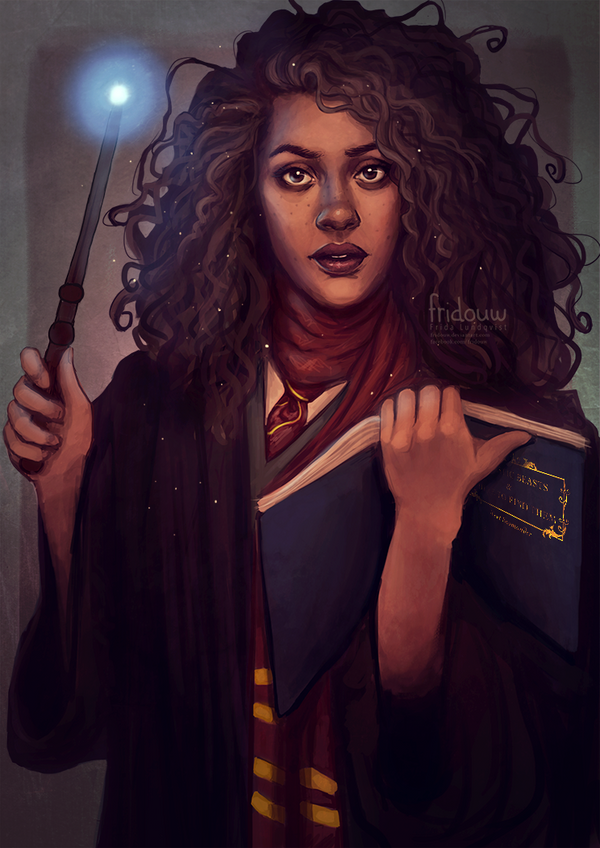
Hermione Granger by fridouw on DeviantArt
For example, J.K. Rowling has now become known for touting out very specific interpretations and facts about the extended universe of Harry Potter, often via Twitter. She maintains significant control over her work and the interpretation of it, often disregarding the explosion of fan interpretation through fanction, fanart, headcanons, and so on, that often reject or ignore her intention.

The feminist (Canadian!) Harry Potter podcast Witch, Please often discusses the tendency of J.K. Rowling to assert her control over the text, and comments on how her interpretations are often not even that great. In one episode, they commented that "when Rowling as a reader revisits her own texts and offers interpretations of them... she's a much shittier reader than many of her fans are." (Their discussion is around 1:19). The Witch, Please ladies then go on to say that fan interpretations of Harry Potter are often much more varied and diverse than JKR's, and often make room for difference and representation that are not present in that text.

I think that's a really cool thing about fan involvement and interaction with a text; fans can take a book that might have shoddy representation, make it theirs, and find that representation in the text through their own interpretation. It's super powerful. I think it's sad when authors like J.K. Rowling can't acknowledge that and can't let go of their own work and give it completely over to their readers.

I couldn't find the quote, but in the episode of Witch, Please that I listened to they made a comment on something J.K. Rowling had tweeted about Fantastic Beasts and Where to Find Them, something along lines of "fun fact: did you know that..." and then some behind-the-scenes "fact" about the world of Fantastic Beasts. The ladies on the podcast just cracked up, making fun of how it's not a fact, it's made up. Of course people didn't know it, because it's just inside J.K. Rowling's head. It just solidified for me how ridiculous it is for authors to insist on their own interpretation of their work. It's like the author sees herself as a queen, dictating the rules and order of her world to her lowly subjects. But that's just not how books work.

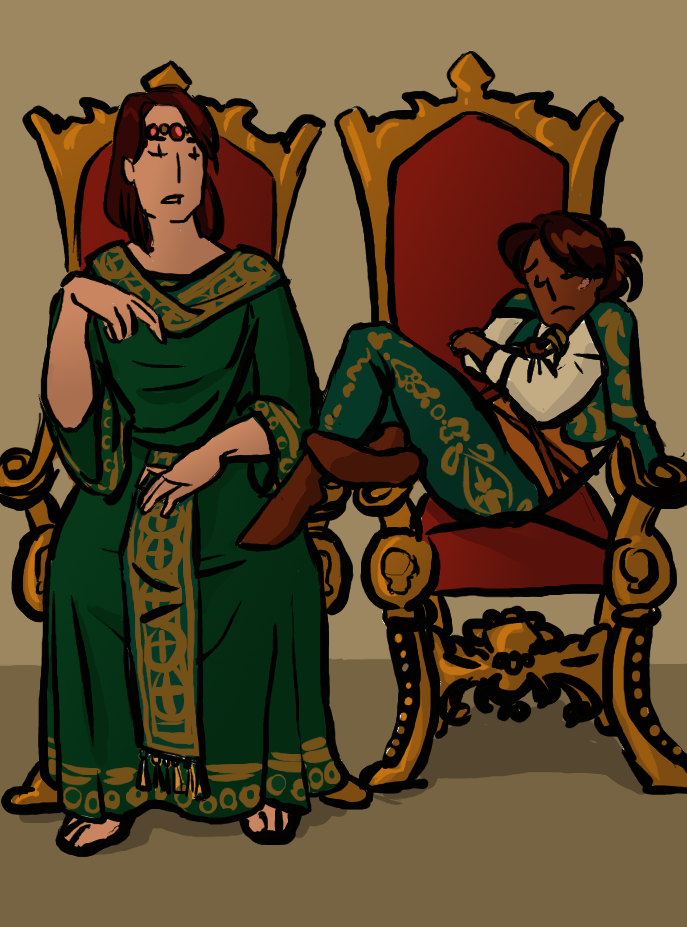
Queen's Thief art by artist rushstarfire.tumblr.com
Now, in contrast with J.K. Rowling who jumps in all the time with random and often offensive tidbits is one of my favourite authors, Megan Whalen Turner, the author of the Queen's Thief series. Megan Whalen Turner is known among all Queen's Thief fans for her "not telling" policy; any time any fan asks her any question about her work or what she intended by something, all she says is "not telling". Yes, this often drives Queen's Thief fans crazy and sometimes they would give their right arm just to hear a snippet of what she might have been thinking when she wrote a certain scene. BUT I appreciate so much the different atmosphere it creates in the fan community.

It's the difference in how it makes me feel as a reader. J.K. Rowling's approach makes me feel that my own interpretation and identity is not worth anything to her, because she obviously feels that what she thinks is the most important. Megan Whalen Turner's approach makes me feel that my opinions on her work are valued and meaningful, which in turn makes me feel like she values me as a reader of her work.  In Megan Whalen Turner's "not telling" she is in essence saying that my interpretation as a reader is a lot more valuable than hers, which is actually pretty amazing when you think about it.

I don't know about you, but I much prefer when an author values me and my opinions as a reader, rather than telling me I'm wrong all the time.

Please comment with your thoughts! I have a lot of thoughts on this topic, so I'd love to get some discussion going in the comments or on my Twitter @asherlockwrites!

How do you feel about authorial intent? Do you care about what the author intended, or does it not matter? What is the effect of authors asserting control over their work? What do you think about authors defending themselves against critique? 

Oh and if it's your thing and you want to keep up with my weekly (!) posts (I'm admitting it out loud so now I am committed), you can now follow my blog on Bloglovin'!

Tuesday, March 7, 2017

Review: The Immortal Life of Henrietta Lacks by Rebecca Skloot

Sometimes, the truth is stranger than fiction. The Immortal Life of Henrietta Lacks is definitely one of those stories - it's a nonfiction work about Henrietta Lacks, who in the 1950s had cervical cancer and had some cells taken from her body (without her permission), which then turned into the immortal cell line called HeLa which has been use in a lot of medical research since. The story of the development of HeLa is interwoven with the story of Henrietta's family and how unjustly they were treated and affected by their mother's cells.


I read this book because it was one of the few books I had on my e-reader that I hadn't read when I was in Vancouver (I usually only use my e-reader while traveling or when reading Australian books I can't buy physical copies of here). Awhile ago my parents and my brother read it, I think as part of The Book Faeries rotation, and the comments they'd made on it intrigued me. Although I think the only comment my brother gave was, "Did you know they ship cells in the mail?"

I'm not a scientist at all, but the medical and science stuff that was in this book was easy to understand and absolutely fascinating. It was interesting how many questions the book brought up about ethics in medical research and what the author calls in the afterword the "tissue issue", as well as the commercialization of research and science. All of this stuff was new to me, and just made me realize how incredibly strange (and awful) the world is. One of my favourite things about reading nonfiction is how it blows my mind open and exposes me to new worlds, and this book definitely did that.

I have to say, though, the most compelling part of The Immortal Life of Henrietta Lacks for me was the story of the Lacks family. Henrietta died not too long after her cells were taken from her, and her children didn't even find out their mother's cells had been taken until twenty years later. The book chronicles the story of Henrietta's childhood, her cancer diagnosis, her death, and the lives of her children and just how awfully they were treated and misled by all of these medical researchers who used and abused them. The book even included the journey of the author and the family (in particular Henrietta's daughter Deborah) discovering how Henrietta's cells were used in science, since even up to the point of the author's research the family still hadn't been told much. The inclusion of the story of the family is done incredibly thoughtfully and carefully, and makes Henrietta and her descendants the protagonists, not her cells, which I think is important.

One of the common themes of the book is how the children wanted Henrietta's contribution to science to be properly recognized, and while I'm sure this book has done a lot in that direction, I was surprised how many people hadn't heard of this story when I told them what I was reading. The book makes her sound so famous, I figured everyone had heard of Henrietta Lacks by now. Anyway, I would definitely encourage you to pick up this absolutely incredibly complex and fascinating story.

Check it out on:
Goodreads
Amazon.ca
Amazon.com 

Also fun fact: the book has been made into a made-for-TV movie on HBO which premieres on April 22.

Wednesday, March 1, 2017

30 Travel Tips From My Trip to Vancouver!

Is this post just an excuse to brag about my trip to Vancouver and show you a whole bunch of snazzy pictures? Why yes, it is. Here are some things I learned on this fun trip, which hopefully you can apply to YOUR next fun trip so you don't make some of the same mistakes I did. And check out the previous travel post I did about why traveling is GREAT for introverts like me! Don't worry, I will be back to regular bookish programming next week.

~*~*30 THINGS I LEARNED ON MY TRIP TO VANCOUVER*~*~

1. Fill up your water bottle at the water fountain once you're past airport security - you brought an empty water bottle for a reason, you know.

2. Bring gum on the plane to chew when you're ascending and descending to help your ears pop (I have to credit my sister for this tip - it's her #1 travel tip for flying on a plane, which she has done once.  I know, I should've listened to her.)

3. If you're going to Vancouver in February, bring warm gloves/mitts.

4. Also bring warm socks, especially if your shoes are runners with a million holes in them (because they're mesh, and also old).

5. Also bring a scarf for the cooler days.


6. Also maybe a hat, or at least one of those headband things to cover your ears. (At least it is not windy in Vancouver, though.)

7. Whenever you travel (or even in your own city), make friends with people from all over the world so you can stay at their house when you visit their hometown.

8. Connect with locals because they know way more than you and can show you/direct you to cool stuff. Listen to their recommendations! Or write them down for next time.


9. If you can, host people yourself so they will be more willing to let you stay with them in the future to repay the favour.

10. Don't eat out for every meal if you're not used to it.

11. Don't drink tea right before you go to bed.


12. When you first arrive, it is never going to go like you expected, but don't worry, it'll get better.

13. Be flexible. (Very important!!)

14. Don't put pressure on yourself to have the most fun all the time; enjoy the highs AND lows. It's all a learning experience.

15. Get lost! (But be safe.)

16. Walk places, you see more and get to know places better.

17. Take transit. You see the city better, learn how to get around your own, and don't have to figure out parking.

18. Don't be too set on your plan. Actually, don't be set on plans at all because they WILL change.

19. Take lots of pictures.


20. Don't forget to take pictures of yourself, too, and the people you're with.

21. Google Maps is great for finding random attractions and restaurants.

22.  Get a good sleep over doing more things so you can actually enjoy and have energy for the things you do.

23. If it's cold outside and you have a couple of hours to kill and need somewhere quiet and free (with Wi-Fi) to hang out, find a local library.


24. Pack your backpack as light as possible, or get one of those backpacks with a chest strap so your shoulders aren't aching (as much) by the end of the day.

25. If you are deathly afraid of heights, don't walk over a giant bridge with sketchy side railings.


26. Rent bikes and bike around Stanley Park if you're in Vancouver! Yes Cycle has cheap rates, only $5/hour and they only charge you after you get back. This was probably my favourite thing that I did.

27. Instead of eating out all the time, buy some groceries and make your own meals. Cheaper and better for you! And then you can eat as soon as you're hungry instead of walking around trying to find somewhere when you're starving. (But also treat yourself and try local food, too.)

28. Take breaks. You don't have to be going all the time.

29. Bring thank you gifts for people who host you.

30. It's your vacation! Do what is most fun for you, which might be ziplining, or it might just be hiking through a magical forest.


Saturday, February 18, 2017

3 Reasons This Introvert Loves to Travel

In a few hours I will be on a plane to Vancouver, where I will be staying with a friend for Reading Week and doing all the fun things! So I thought for my post this week I would talk about why I love to travel, as well as why being an introvert and traveling actually go together way better than you'd think.

I'm an introvert, which means I get drained going out to big parties, making small talk and meeting new people, but I get energy out of being by myself (sometimes), and  being around my close friends. That's just a basic overview, there's a lot more complications and different circumstances, and also all introverts are different, but that's how I feel most of the time.

So, traveling - something that involves dealing with new situations, people, and the unknown pretty much all the time, so why do I as an introvert love it so much?

Well here are some reasons traveling is actually GREAT for introverts like me! :)


1. It forces you out of your comfort zone

There's not really going back once you've bought a $500 plane ticket, and once you do that you have to deal with all the new things, complications and people that traveling involves. Even if you're traveling with friends, you're going to have to deal with things that you wouldn't have to in your everyday life. When I went to the Philippines, I had to do so many things I'd never done before, and discovered how capable I was at doing things I'd never imagined I would do.


The wind made my hair like that, fyi

2. People traveling also want to meet new people!

One of the things I find difficult as an introvert is meeting and connecting with new people. It's especially hard in day to day life when people already have people they know and circles they travel in, and aren't necessarily looking to get to know new people. But I still want to meet people! Often when you travel, other people who are traveling also want to new people, so you already have somewhere to start. When I went on Explore, talking with people was easy because basically everyone came on their own so nobody had previously established friendship groups to break in on - we were all making them up as we went!


3. You get to know people REAL WELL REAL FAST

This is one of my favourite parts of traveling. When you're stuck in a car with someone for 8 hours, or you're spending a week with someone, you have ample time to get to know them and chat about everything and anything. When traveling, you're often in cramped quarters - a tent, a hotel room, a car - and that means you find out a LOT about the people you're traveling with. As an introvert, I get so much energy from getting to know people really well. (I LOVE deep, soul-searching conversations. Give me all of them.) I went to NerdCon: Stories in Minneapolis with a friend of mine, and during the two eight hour drives we had to do we had some really nice chats. :) 

Going through all my travel photos made me really want to travel again... good thing I'm leaving in like two hours!!! 

Why do you like to travel (or why do you NOT like traveling?)

Tuesday, February 14, 2017

How I Study

It's the week before Reading Week! If you're a student, you know that means EVERYTHING IS DUE. But the end is near...

Anyway, since most of my time right now is taken up by writing essays, practicing presentations and studying for midterms, I thought I'd tell you how I study and include some handy dandy study tips! If there is anything about my identity that I am completely confident about, it is that I am a good student. If I know anything, I know how to organize my schoolwork and study habits. (Now if only I could be as competent in all the other areas of my life...)

So here are ~*~*ALYSSA'S STUDY STEPS AND TIPS!*~*~

Step 1: Read the review and listen closely

Most of my professors in my four years of university have been pretty good at giving review sheets, which include the questions or topics that they want you to know for the test. Some of my professors even go over the review a bit in class, about what they are expecting for certain questions. Make sure you pay attention, and write LOTS of notes when your professor talks about what they want on the midterm! This is invaluable information and they are plopping it right in your lap!


Step 2: Create my own review using the review sheet

I write my notes by hand because part of my study process involves typing up my notes. So I'll go through my written notes, and then plug them in as answers to the review questions. That usually takes a couple hours, but it's actually really easy - it's basically just typing while listening to music, and it's a good way to begin and get everything organized. If you type your notes in class, I would suggest printing them out and then typing them in again to your review sheet. I know you could just copy and paste, but then you're not actually methodically going through the information again, which is helpful for actually retaining the information later. And if I haven't got a review sheet, then I make sure I'm focusing on main subjects and points, rather than silly small details. If in doubt about anything you're not sure you're supposed to know, ask your professor!!


Step 3: Whiteboard study!! 

I love my whiteboard with all my heart for all things organization, but especially for studying. I'll transfer my entire review sheet to my whiteboard, although a slightly condensed version of it (because I only have so much space on my whiteboard). I'll try to focus on writing out the main points and keywords that will hopefully trigger the rest of the details. I usually do this a couple days before my actual midterm, because then I can scan it again a few times as I'm getting dressed or ready for bed in the following days. Also, it's super fun putting all my notes in a whole bunch of funky colours. ;) (Also tip: if you're going to use this technique, make sure you buy low odour markers otherwise you will have a headache after one page of notes.)


Step 4: Quiz myself

The ideal is to get together with a classmate and we quiz each other, but if that's not an option I try to find a willing family member. If I can't find a willing family member, then I'll just do the cover-the-answers thing and ask myself questions. The trick is to try saying the answers out loud. Once I can explain the material to someone else (or empty space) out loud, I know I'm ready for the test!

~*~*Some more tips*~*~

Tip #1: Use a variety of methods I've heard that it's good to study with a variety of different methods, because each different method solidifies the information in your brain even more. So by the time I'm done my study process, I've written the material, typed the material, written the material (in fun coloured markers), and said the material out loud, which I think is pretty good. ;)

Tip #2: Start early Obviously this process is fairly long, and takes awhile. You can't really cram AND do a lengthy 4-step process. I usually start maybe a week ahead, or at least the weekend before my actual midterm, and I usually do one step a day so it doesn't feel like too much all at once.

So that is how I study! Now I must get back to work... happy studying!

How do you study? What are your favourite study habits and tips?

Monday, February 6, 2017

My Bookworm Bedroom

How to motivate yourself to do a super thorough cleaning of your room: decide you are going to do a blog post room tour featuring a bunch of pictures of your room.

So, yeah, here is a tour of my bookworm bedroom. Enjoy! :)


I have this poster I made on my wall just as you walk in. It's a quote from Ivan E. Coyote's The Slow Fix, which I talked about in my Across Canada Reading Challenge. The idea is that I'm the "she who stayed to write the story", since I do most of my writing at my desk now. :)


Then from the doorway, if you turn to the left you see my desk, shelves, whiteboard, and my beautiful calendar that I got on sale from my local bookstore. My whiteboard is very important. It is where I display important papers/reminders (using my collection of tourist magnets), write my to do lists, and study when I have an exam. What do people do who don't have whiteboards??


The beautiful calendar I have is the 2017 Japanese Decorative Papers Calendar. I love nice calendars like this because it's not just for organization but also a decorative wall painting, bonus that all the designs in this calendar are gorgeous. (This is the calendar!) The cards beside it are cards from friends that live in different provinces.


The bookshelves above my desk are mostly for my school books. The top shelf is some sentimental stuff from my childhood, and my school stuff that I don't use or textbooks that I'll sell eventually. The second shelf is some notebooks and all my nonfiction books, including writing books and cookbooks! See if you can spot the book Your First Novel by Ann Rittenberg and Laura Whitcomb, which is the book that in a roundabout way introduced me to the online YA community and got me to start blogging! The third shelf is some pretty MG and YA books, and the school books that I'm currently using (can you guess what classes I'm in right now?)


The stickers are from when I went to NerdCon: Stories, the Hunger Games keychain I got from a friend, and the gorgeous bike chain bookend is from Ten Thousand Villages! The bookend is against some of my favourite books.


Okay, other side of my room! My window sills, where I keep my plants (in the nice Ikea greenhouse I got for Christmas), and my bookshelf where I keep my books and my collection of tea cups. (I don't actually collect tea cups - if any family is reading this, please stop buying me tea cups.) As you can see, another couple of themes of my room are tea, and music. I have received a lot of music note patterned gifts over the years, which is fine, I like music. :)


Now, one of the most important parts of my room aside from my bed, my bookshelf! I don't actually have a ton of books, because I recently went through them and got a rid of a bunch, but also because I'm not a huge book collector. I really only need to have the books I'll reread over and over and over again (*cough*Melina Marchetta), and if others are just going to sit on my shelf and not be read, I'd rather give them to someone who would enjoy them more. (Although all the shelves are double stacked, so... I still have a lot of books...heh.)


This shelf is my TBR right now pile, the books I'm going through at the moment. It holds any library books I have out, as well as books I've bought/been given and haven't gotten around to yet. (Which book should I read next?? I've already read Nimona and Lumberjanes, which were GREAT I can't get enough of them.)


This is my Christy Miller shelf, which was one of my favourite series growing up (it's an inspirational Christian series, super fluffy but I like fluff). The train car has significance if you've read the books. ;)


A dishes set from my grandma, and my adult fiction shelf! Lots of Miriam Toews. If you haven't noticed I don't really spend a lot of time organizing my books in fancy ways. I am lazy like that.


This is one of my favourite things I did in my room - my wall of bookish pictures above my bed. Each picture is either from a book, or is a reference in some way to a book. For example, I don't know how well you can see it but the bird on the top left is one of Audubon's birds, which has significance in Okay For Now by Gary D. Schmidt, probably my favourite MG book ever. Can you guess what books the rest of the pictures are from? (Oh wait! Just realized I lied - one of the pictures isn't from a book, it's Pascal Campion art.)


Calypso says thanks for coming and looking around!

What's your favourite thing in your room?

Wednesday, February 1, 2017

13 Books With Stories of Immigrants

Happy Wednesday! Here are some good books I've read that feature immigrants as characters, or are about the experience of immigrating that I think you should check out:


Bright Lines by Tanwi Nandini Islam
Adult fiction, US

"A vibrant debut novel, set in Brooklyn and Bangladesh, Bright Lines follows three young women and one family struggling to make peace with secrets and their past."  This book was different, absolutely full of emotion and discovery.


Intolerable by Kamal Al-Solaylee
Memoir, Canada

"Intolerable is part memoir of an Arab family caught in the turmoil of Middle Eastern politics over six decades, part personal coming-out narrative and part cultural analysis. This is a story of the modern Middle East that we think we know so much about." A fascinating and extremely relevant story.


Ru by Kim Thuy
Memoir, Canada

"In vignettes of exquisite clarity, sharp observation and sly wit, we are carried along on an unforgettable journey from a palatial residence in Saigon to a crowded and muddy Malaysian refugee camp, and onward to a new life in Quebec." This book is absolutely beautiful, and made me cry multiple times.

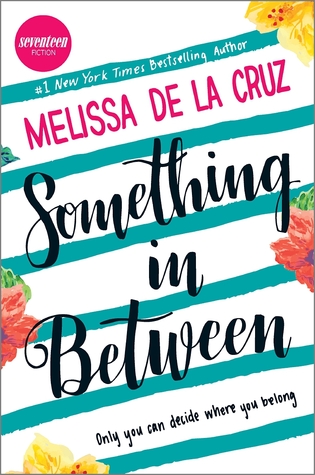
Something in Between by Melissa de la Cruz
YA, US

A story about a daughter of Filipino immigrants in the US who finds out she doesn't have proper documentation, and how her teenage life is affected by that realization. There's also a fun romance in it if you like that kind of thing. 


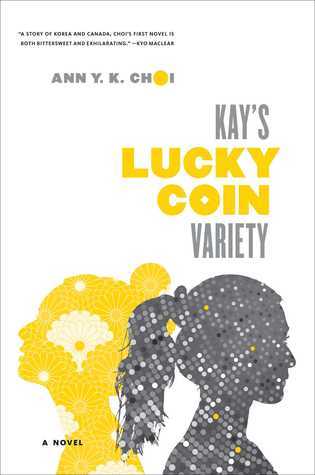
Kay's Lucky Coin Variety by  Ann Y.K. Choi
Adult fiction, Canada

"A unique and imaginative debut novel, Kay’s Lucky Coin Variety evocatively portrays the life of a young Korean Canadian girl who will not give up on her dreams or her family."


Citizens of Nowhere by Debi Goodwin
Nonfiction, Canada

A story that follows 11 refugees from Somalia for a year as they come to study at universities in Canada on scholarships, and all of their struggles in trying to figure out a new country.


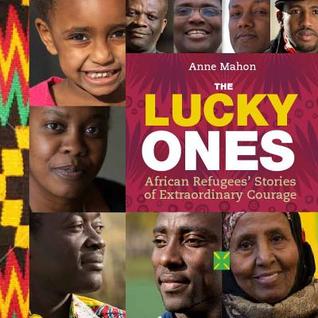
The Lucky Ones by Anne Mahon


Nonfiction, Canada

A collection of stories of African refugees, told in their own words. Each of the stories is a small snapshot of the experiences of immigrants to Canada, each one unique.


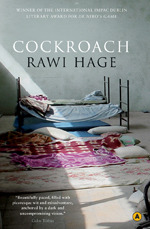
Cockroach by Rawi Hage
Adult fiction, Canada

One of the darkest, most fascinating books I've ever read about immigration. I think I'd have to read it again to get all of the meaning out of the various images the author uses.


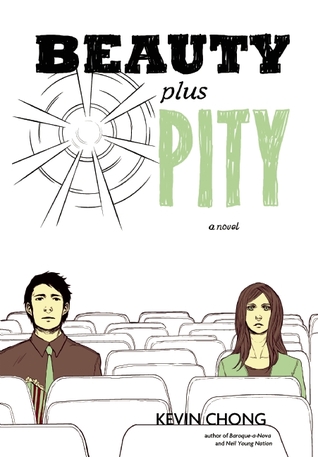
Beauty Plus Pity by Kevin Chong
Adult fiction, Canada

An enjoyable, quiet and slow paced book about family and relationships. "Written with a winsome yet plaintive eye, Beauty Plus Pity is about a young man who's forced to reckon with the past as he works through his lifelong ambivalence toward his hyphenated cultural identity, and between two parents holding intolerable secrets."


Listen, Slowly by Thanha Lai
MG fiction, US

A super adorable story about a young girl going back to Vietnam to visit her family who lives there, and all the trouble she gets into and friends she makes along the way.


Looking for Alibrandi by Melina Marchetta
YA, Australia

A heartwarming story about a family of Italian immigrants living in Australia, in particular the dramatic Josee Alibrandi.


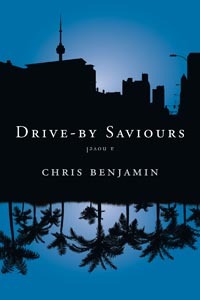
Drive by Saviours by Chris Benjamin
Adult fiction, Canada

"Moving gracefully between Canada and Indonesia and through the two men’s histories, Drive-by Saviours is the story of desire and connection among lonely people adrift in a crowded world." Read my full review here.


Everything Was Goodbye by Gurijinder Basran
Adult fiction, Canada

"Heartbreaking and beautiful, Everything Was Good-bye is an unforgettable story about family, love, and loss, and the struggle to live in two different cultural worlds." I loved this book, and I think Meena is one of my favourite female characters. 


Recommend some of your favourite books about or written by immigrants in the comments! 

For some more recommendations, check out 49thshelf's list of books about Canada from an immigrant's point of view. 

LinkWithin

Related Posts Plugin for WordPress, Blogger...