Showing posts with label canadian. Show all posts

Thursday, September 27, 2018

5 Strategies to Actually Enjoy Reading Poetry (+ Recommendations!)

Yeah, I don't really "get" poetry. Poetry is too complicated. Poetry goes over my head. It's pretentious. It's for English major nerds. It's definitely not for me.

These phrases or variants of them are probably things you've either said sometime in life, or you've heard someone else say. I have definitely both said them and heard them said. Poetry is often thought of as complicated work that is hard to understand and inaccessible to most people.

Well, I'm hear to tell you, no longer!

I've gotten a lot more into reading poetry lately, mostly the result of a writer's festival I'm volunteering for. A lot of the writers I was unfamiliar with, so I thought I should read some of their work. Most of them turned out to be poets, so I ended up checking out a bunch of poetry books from the library and fell in LOVE.

Anyway here are some things I've kept in mind while reading poetry that have helped make it an entirely more enjoyable experience*:

1. Just read 

Read poetry as you would any other book - for enjoyment, line by line, taking in the words. You don't have to worry about extracting a certain meaning from the text because this is your reading time. Don't worry too much about trying to understand the poem either, just kind of let the words wash over you how they will. Getting frustrated that you aren't getting something is a sure fire way of taking the fun out of reading poetry.


2. Skip poems you don't like

Is there a poem that puts you off, or is just way too out there for you no matter how many times you reread it? Instead of feeling like a failure for not understanding great art, acknowledge that subjective experience is a thing and you won't click with every poem. The fun thing about poetry books is they include a whole bunch of poems - some that will click with you and make you feel like you were punched in the gut, and others that you'll breeze through and never think about again.


3. Let them connect with you where you're at

One of the cool things about poetry is how they can really deeply speak to someone's experience. A certain poem you read may really impact you and speak to where your life or mindset is at the moment, and that's the really powerful, fun part of reading poetry. Hold on to those moments. Save your favourite poems to reread later when you're in that emotional space.


4. You don't have to read everything

Just like anything else, not all poems are for everyone! Find poems that *you* enjoy reading. There are so many different ways of writing poetry out there. Some styles might annoy you, so just stay away from those! Your pretentious artist cred won't be damaged if you skip over poems you don't like for ones you enjoy. Maybe you like T.S. Eliot. Maybe Rupi Kaur's simple but elegant style is more for you.

5. Don't care what other people think

Poetry is often given a bad image (mainly from terrible high school English classes, at least in my experience). In some literary circles, you can be put down from liking certain kinds of poets or liking poets that use language in a more direct way. You can be made to feel stupid for not understanding or liking old classic poets (probably old white men anyway), or childish for following your favourite Instagram poets. But I say poetry should be consumed and enjoyed, whatever way you might wish to do that. So don't care about the pretentious literary snobs. They aren't having as much fun as you.

So, now that you're super excited to get into poetry, where should you start? Well, I've got some great recommendations for you:

#IndianLovePoems by Tenille K. Campbell is a collection of poems on Indigenous intimacy, sexuality, love and family, interwoven with Indigenous cultural images. The poems are quick and easy to read, but they are also hilarious and bold. It's a stunning and confident collection which you should go read right now.


This Wound is a World by Billy-Ray Belcourt knocked me off my feet from the very first poem. I would dog-ear the entire book if I wasn't borrowing it from the library (I will buy it asap don't worry). These poems focus on themes of Indigenous and queer identity, and the sadness that can be encompassed in that, but also the beauty of feeling that sadness. Belcourt says in his afterword that his book is "nothing if not a tribute to the potentiality of sadness" and that sharing the feeling of being lonely or alone is a way to make new forms of collectivity. His poems are absolutely heartbreaking but in the best, most cathartic way.


questions i asked my mother by Di Brandt was a book that shook up Mennonite communities when it was first published, and it still has the potential to speak to religious communities today, with commentary included in her poems on traditional religious roles, traditional communities, patriarchy, women’s speech and sexuality. It presents these themes in beautiful unstructured poems that have incredible depth to them.


Unstable Neighbourhood Rabbit by Mikko Harvey is an absolutely fascinating collection of poems that turns the world on its head. These are the kinds of poems that after you've finished them you feel like you've been punched in the gut because they turn out to be about something different than you originally thought. I had the opportunity to hear the title poem of this book read aloud by Harvey, and after he finished it you could literally hear the audience exclaim under their breath in awe and wonder.

Well, there you have it. You now have all the tools to be a poetry connoisseur, and be exposed to some great, world-changing writing.


*Disclaimer: while these strategies can be useful for enjoying poetry again, they should not be used for poetry analysis for classes. Although I've found knowing how to analyze poetry actually aids in my enjoyment sometimes! However, this is basically just a guide to remove some barriers and get you started. 

Saturday, July 18, 2015

Across Canada Reading Challenge Part 1: The Provinces


This year I decided to take part in the Around the World Reading Challenge (which you probably know since I've mentioned it in like every blog post this year.) As a part of that challenge, there are a bunch of mini-challenges that you can take part in, like read a book from a certain number of countries. One of the suggested mini-challenges was read a book set in every state, but I decided to switch it to read a book set in every Canadian province and territory, since I'm Canadian. (Also I'm sure I've already read a book set in almost every US state, which just shows you how much influence American media has).


It was really fun reading a whole bunch of Canadian books and learning more about my country and the varying cultures within it. If you're American, you have no idea how much American media often swamps other countries' local media. Most people I know watch a lot of American TV and movies, and probably 90% of the YA I read growing up was set in the US and written by American authors. It's probably the worst in Canada, since we share the same language, similar culture, and a border. 

The thing is I probably know more about what makes an American novel than a Canadian one. It's really fun to see how even though a lot of the time I think of Americans and Canadians as being essentially the same, Canadians really do think differently than Americans do. That difference comes across in the books that I read for this challenge. The stories that Canadians choose to tell are very different from the ones Americans tell. Of course, this is only the beginning of my adventures in CanLit, so I can't make too many sweeping generalizations.

For now, I'll just talk about the books I have read so far. I thought I'd split this post into two since otherwise it would be way too long, so in this post I'll talk about the books I read from each province, and then in Part 2 tomorrow I'll talk about the books I read from each territory.

BRITISH COLUMBIA

We'll start on the West Coast with BC! I actually ended up reading three books set in BC. The first was Beauty Plus Pity by Kevin Chong, which I did a review of so you can see what I thought here. It's an easy to read but also very interesting family story about a second-gen immigrant from Hong Kong. Another book I read set in Vancouver was Everything Was Goodbye by Gurijinder Basran, about a girl who struggles with the culture and wishes of her Indian family by falling in love with a white man. The story follows how the MC experiences the culture clash her entire life. I also read The Beckoners by Carrie Mac which is set in Abbotsford. That was a very intense YA book about extremely violent bullying. I think I liked the other Carrie Mac book I read, The Opposite of Tidy, better.


ALBERTA

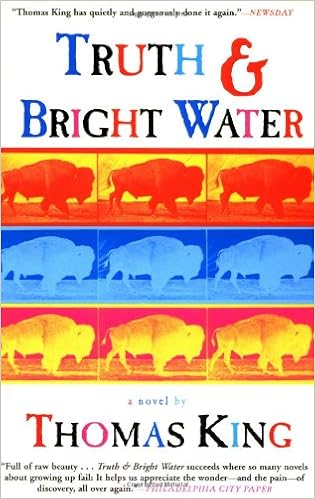
Onto the land of black gold. The book I read for this province was Truth and Bright Water by Thomas King, about the life of a young Aboriginal boy and two towns on either side of the US/Canada border. While doing this challenge I also read a lot about and the stories of Aboriginal people. I always find it interesting reading Aboriginal stories, because the way Aboriginal people think is very different from the way I think. Truth and Bright Water was an easy read, and fairly humorous despite one of the characters constantly saying that what's wrong with Indians is they have no sense of humor.


SASKATCHEWAN

I had so much trouble finding books set in SK. The province has such a tiny population, so there's only a small percentage of published books about it written by Canadian authors and whose books I actually have access to. I ended up reading Dust by Arthur Slade, which was a younger YA about a weird magician-like person who puts a spell on a town in Saskatchewan during the Dust Bowl. I think this book was just a bit too young for me to enjoy. It was weird thinking of Saskatchewan during the Dust Bowl as a place for magic to happen, though.


MANITOBA

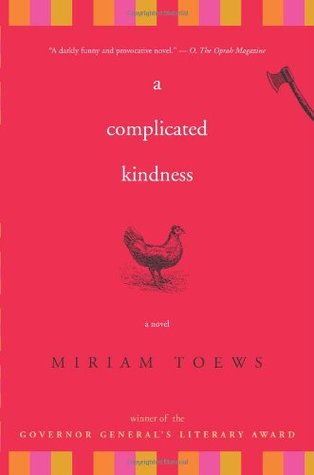
My home province! I read Louis Riel: A Comic Strip Biography by Chester Brown. If you don't know the name Louis Riel, well you should learn it. He's thought of as one of the founding fathers of Manitoba, although the actual history is a little bit less straightforward. That was the fun thing about reading this biography, is you realize just how not straightforward history is. Louis Riel was one weird dude, that's for sure. I also read A Complicated Kindness by Miriam Toews, who is a prominent Manitoban and Canadian writer. A Complicated Kindness is a story about a young girl growing up as a Mennonite and her struggle with her culture. Mennonite stories are a huge part of Manitoba, so it was interesting learning more about that culture.


ONTARIO

It is not hard at all to find books set in Ontario, considering that's where most of the population of Canada lives. I read The Unlikely Hero of Room 13B by Teresa Toten, which focuses on a young boy with OCD and his affection for a young girl in his group; Skim by Mariko and Jillian Tamaki, a short graphic novel about a Korean girl and her trials at school in Toronto, and Lies Beneath by Anne Greenwood Brown, a book about murderous mermaids who live in Lake Superior. It's an interesting concept, mermaids who live somewhere considerably less tropical and oceanic.


QUEBEC


For Québec, I read Cockroach by Rawi Hage which is about an immigrant making his way in the diverse community of Montreal. It was very much about the difficulties of being a Canadian immigrant. It's interesting because a lot of the time in the news and stuff you read about all these happy ending Canadian immigrant stories, that Canada has rescued these people and Canada's so great and welcoming and multicultural and all that. But this book, as well as Drive-by Saviours, shows a very, very different experience of Canadian immigration, one that people don't hear about as often, but is nonetheless still true to the experience.


NEW BRUNSWICK
 

I read a short book called Summer Point by Linda Mcnutt, which was about the longstanding effect of staying at a cottage for one summer in New Brunswick on one woman's life. The writing was very subtle, which I liked, but I felt like it could have gone into a lot more depth with the characters. It was just too short of a book to really flesh out the character's and their stories. I did enjoy the short story that I did get to read, though, it was well-written and the story flowed quite well.


NOVA SCOTIA

One thing I noticed when trying to find books set in the Maritimes is how many books set there are historical fiction. The Birth House by Ami Mckay was a historical fiction novel about a midwife set in the early twentieth century. It was mainly a novel about women's rights, especially in regards to giving birth. It also touched on the theme of white men coming in and taking over and ignoring the voices who know better in order to give something that they think is better but really isn't, which is a common theme in a lot of the books I've read. But I felt like it was too obvious what the author was trying to say, and it came off kind of preachy. I think truths in fiction need to be more subtle.


PRINCE EDWARD ISLAND

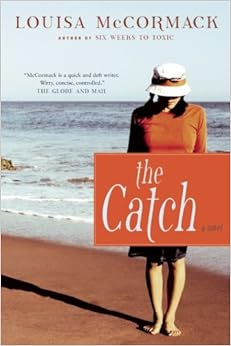
I read an adult romance book called The Catch by Louisa Mccormack, about a middle-aged business
woman finding herself by spending a summer in a small town on PEI. It wasn't a bad read, but I didn't feel like the main character really learned anything by the end which was disappointing. My favourite part was definitely the small town PEI atmosphere of it. I loved how the story of family and friends and neighbours who all know each other was at the heart of the book.


NEWFOUNDLAND AND LABRADOR

I read February by Lisa Moore for this province, about a woman dealing with her husband's death. It was also tied in with the story of her son getting some girl he met in Iceland pregnant and trying to avoid doing what his mother thinks he should do. It was okay, but it was just too slow for me. There were too many details that felt unnecessary to me, and that didn't really give any greater insight into the characters or story.

Well, that's it for the provinces, stay tuned for tomorrow, when I'll go over the books I read set in the North: Yukon, Northwest Territories, and Nunavut!


LinkWithin

Related Posts Plugin for WordPress, Blogger...