Showing posts with label fiction that feels real. Show all posts

Tuesday, July 10, 2012

How To Journal (In Order To Be Helpful To Your Writer Self)

(Note: the theme for the pictures is "Experiences I Would Journal About". Also, "Here's Some Visuals to Help You Through the Word Slush").

Upon reading the title of this post, you might be thinking: "How to journal? Um, Alyssa, journaling isn't something you tell people how to do..."

Toboganning and beautiful Canada.
OK, yes, I realize journaling is a very personal and independent activity and you basically do what you want and actually I don't really even write journals (and now you're thinking and you think you're qualified to give me how-to advice??? what is this place???).

But... I've decided I'm just going to give you advice anyway.

First of all, I shall tell you about my journaling/diary history. If you've read this post, then you probably already know a bit about that particular topic. Basically what you can gain from my journaling history is that my journals were filled with stuff like hateful thoughts, a few boring sentences about my day, or things that are really stupid and don't make any sense.

"Tire d'erable" at the winter festival.
Maple syrup, basically.
Also, looking back through the entries of the diary I got when I was six, I get frustrated. Because, seriously? I wrote about THAT? ("That" usually being how much I hate/dislike a variety of cousins, friends, and general other people I knew).

So yeah, I stopped writing journals except for on trips pretty much because I hated how they showed me how much of a stupid young child I was.

But the other thing I want you to note about all those journals and journal entries is that they did not -and have not- helped me with my writing (aside from helping me with an entertaining blog post, o 'course).

So I'm kind of piggy backing off of this post. That post (the one I just linked to) talks about truth in fiction and how to inject ourselves into our writing in order for our writing to come out more real and true and, ultimately, more beautiful and relatable. This requires a very, VERY different kind of journaling than the kind of journaling I did from ages six through 14ish.


Mt. Rushmore on choir tour... of all days to be foggy.
HOW TO JOURNAL IN ORDER TO BE HELPFUL TO YOUR WRITER SELF

  • Whenever you find yourself comparing how something feels in your life to how something is commonly presented in books/other fictitious media, write down what YOU are feeling.

  • Note what you notice. You are going to notice things in different ways than characters in books, but what YOU notice matters more, because you are real.

  • Don't just talk about the things you did in a day when journaling. You can talk about stuff you did, but also talk about how you felt, or thoughts you thought or opinions you realized you had while you did stuff.

  • Use detail when describing anything: what you notice, or what you did, or how you felt.

  • Remember that when you experience something yourself, and then write about it, THAT is when your writing will feel (and be) the most real and that realness will then help readers to connect to your work.
So, now I'm going to give you homework. Here's what you have to do:

Go out and do something, even if it's just something really simple. Go to the park, go for a bike ride, play with your cat, even eat cereal... anything, just do something. Pay attention to:
  • your thoughts
  • your feelings
  • what you're noticing
  • detail

Then, after you're done doing whatever you did and paying attention to whatever you paid attention to, write about your experience.

Hiking in the desert with my friends.

And THAT, my friends, is how you journal.

---

I really hate to ruin a rare awesome blog post ending like that ("awesome" because my usual endings are along the lines of "so... yeah"), but I really would like to get some feedback from you!

I want to know if you do end up doing the writing exercise and if so what came out of it. In fact it would be cool if you even did it as a post on your blog, and then you can post the link below and I'll check it out. :)

Also, I want to know what you think. There may be other things I haven't thought of while forming these opinions, and maybe you see a hole in my logic. Do you think this is a good way to journal that would be helpful to your writing? How do you journal?

I would also love if you could go here to check out that truth/reality in fiction post I talked about above, and I would love to hear your thoughts and opinions on the opinions I present there. I really love discussion so please don't hesitate to comment, e-mail me (kazuntai101[at]gmail[dot]com) or even tweet me @AlyssaSherlock.

So... yeah. ;)

Monday, July 9, 2012

Truth in Fiction

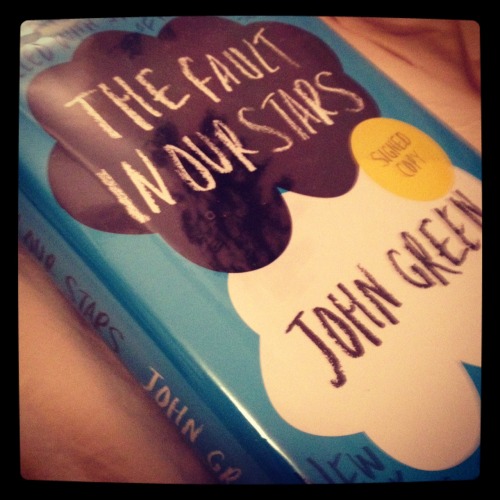
I just finished The Fault in Our Stars by John Green, which yes, is a good book. I think the thing that strikes me most about John Green's writing (other than the fact that he writes beautifully) is how achingly real what he writes feels.

OK, now is the part where I try and tell you what I'm talking about.


There are lots of books about death, and I've read a lot of books about death. After a while, they start to seem the same. The characters always go through the same motions, act the same way, deal with the same issues, and after a while I get sick of it, and it seems fake.

I don't know, maybe these people draw from their own experiences, but when I read these kinds of books it doesn't seem like they do. I think a lot of writers end up falling into the same old stereotypes and ways of presenting things because that's what they know, and that's what they've read all the time. I know I've done it. When I was in middle school, I started a bunch of stories centred around popularity and yup, there were those typical Mean Girls and Best Friend Group of Three that pop  up in YA ALL THE TIME. I wrote that stuff because that's what I read and that's what I knew.

But it wasn't real. Popularity in real life, at least I find (or at least in my school), is absolutely NOTHING like it is in books.

I think in order to avoid falling back into the regular stereotypical fluff, we have to draw from our own experiences, but in a way that you put all or almost all of yourself into what you write.

Sometimes when I do things like go to a funeral, or  spend time with my family, or even go bike riding, or anything in real life I'll be taking notes in my head of what I'm experiencing and what I feel like at that moment. I try to remember every detail. And I don't dramatize or anything, I just bring to focus what I'm thinking at those moments, what I'm experiencing. (These kinds of thoughts are also usually present in journals and diary entries). One thing I always find is that I'm noticing and experiencing things a lot different than characters in books usually do.

But what I'm experiencing is real, and the books are not. I know fiction books are just that: fiction. But that's not an excuse to not write things that aren't real and clear and truth.

Here I shall insert a John Green quote that I've used before:


Lies are attempts to hide the truth by willfully denying facts. Fiction, on the other hand, is an attempt to reveal the truth by ignoring facts.

Fiction is an attempt to reveal the truth.  If us as writers are trying to reveal the truth, then why are we so quick to fall back into the old stereotypes and clichés and why are we as readers so willing to accept them?


I know pouring yourself into your writing is hard, REALLY hard. Walter Wellesley Smith got it right when he said, "There's nothing to writing.  All you do is sit down at a typewriter and open a vein."  Opening veins is painful and difficult but also, I think, necessary in a way in order to reveal the truth.


So, yeah, that's what I mean when I say that John Green's writing is "achingly real", and if you want to learn to write like that or you just want to read a good book, go read The Fault in Our Stars. Please.

LinkWithin

Related Posts Plugin for WordPress, Blogger...