Saturday, August 15, 2015

Why You Should Read


I used to think that it was okay that some people didn’t read. Whatever, that was their life choice, not everyone is into reading. I mean, of course I wanted to everyone to be into reading because I love it, and I want to everyone to experience the awesomeness of reading like I do, but when it came down to it, people could do what they wanted.

Since then, I've changed my mind. Now, I think, yes, everyone should read. I don’t care what people read, I just want people to read, something, ANYTHING. I believe wholeheartedly in the quote by Frank Serafini about how there’s no one who doesn’t like to read, there’s just people who haven’t found the right book. There are billions of books out there, of all genres, and I’m sure that somewhere out there, you can find books that you enjoy, at your reading level and within your interests. 

Just looking at my family, you can see how diverse reading tastes are. I mostly read YA fiction and dabble in a bit of adult and nonfiction. My dad reads mostly nonfiction. My mom likes adult thrillers and mysteries. My brother will read anything as long as you literally hand it to him. My sister likes books based on movies, or fun MGs, or even better yet, fun MGs that have a movie adaptation. We definitely don’t all read the same thing, but we all read. I’ve come to believe that reading books is extremely important, and I’d almost say necessary. 


Why do I think reading is so important?

One reason is that through reading, I have the opportunity to enter into someone else’s experiences and thoughts. I don’t think there is anything that is more powerful than a book in helping people step into someone else's shoes. I have lived so many different lives, often very different than mine, through reading. 

I know that it's possible to learn about other people's experiences through TV or documentaries or YouTube videos. But I think that books are much more effective at doing this. Often, especially in fiction, you are forced to take on the perspective of the main character. Even in nonfiction, you’re reading from the perspective of the author. You are thrown directly into that person’s perspective, and you are tied to it through the words that you are putting into your brain. The most obvious example of this would be first-person fiction. You are privy to the very inner thoughts and feelings of someone who is not you. 

How amazing and powerful is that?

The power that books have in connecting you deeply to someone else’s experiences is so incredibly important. First of all, when you have internal access to someone else’s lives and experiences, or another place in history (depending on what the book is about), I think it is almost impossible not to develop empathy for that person. 

Not only are you drawn into creating a personal connection with the characters, author or situations you read about, but you become a participant in those experiences yourself. When you read, you don't experience things second-hand like you do when you watch things happen on TV. Through the characters or author, you are participating directly in the author/character’s experiences. I’m sure you’ve probably heard people talk about getting lost in the world of a book, or feeling like the characters or world was real. In a really good book, I forget who I am and where I am. I am completely taken over by the lives of who or what I’m reading about. 

As a result of that deep, personal connection with the world of the book, empathy for the characters in the book is almost inevitable. You know exactly how it feels because you basically experienced it yourself. 

Of course the most important thing is that in the end, it’s not just empathy for the characters or the author. In the end, it’s empathy for people, for humans in general. It’s empathy for the people around you in your life. 

First, characters help give you an understanding of other people’s perspectives and experiences, and then you can apply that to your own life. You can begin to understand and feel for other people, because you are now able to share in what other people experience, or know what other experiences are like. You can realize the multitude of other experiences outside of your own. This is also why I think it’s also incredibly important to read diversely – to read books with characters that have different abilities or skin colour than you, or books about places other than where you live. 

Of course, it doesn’t stop with empathy. Books also have power to open your mind to so much. Learning is a huge part of why I love reading. I love learning. Learning is important for moving the world forward, for helping to get rid of prejudices, to help realize past mistakes and move beyond them. 

There is so much to be discovered through the world of books, both fiction and nonfiction. In fiction, learning comes from what I’ve already talked about in regards to empathy and other people’s experiences. Fiction also helps you to learn about the essence of who we are as humans. I could tell you about countless YA books I’ve read that have taught me about what humans are like and the strength people can have through so many situations. And in both fiction and nonfiction, there is so much to learn about everything, every topic you could imagine. Different countries, different places, different people, science, history, conflict... the list goes on. 

I know that nowadays there is an infinite amount of information available, thanks to the internet. But I think what makes books unique is that personal connection I’ve already talked about, that connection between you the reader and either the characters or the author. There is something deeply intimate about reading a book, that creates an inner personal experience and connection that just can’t be achieved in the same way anywhere else.  

In order to truly learn empathy and other things about the world, it is definitely necessary to read widely, and diversely. I admit that I’m not the greatest at this always. I often like reading inside my comfort zone, who doesn’t? I’m working on it, though. The world is a huge place, and it encompasses billions of stories. Why should you limit yourself to learning about one specific, particular experience? Reading should not only be about identifying with experiences similar to your own, but also about learning about experiences vastly different from your own. Every time I read a book about something so very different from my own life’s experiences, it causes me to step back and think.

That’s another thing that books do – they make you think. Or I think that’s what they should do, anyway. If you’re reading diversely, about people’s experiences, then you end up thinking about those experiences and the implications of them in regards to your own life. Books have opened my mind to so many new ideas, or opened up different perspectives on old ideas, or they’ve forced me to re-examine my own thoughts and make me ask myself why I think a certain way. Or they’ve made me think about human experiences. I think about different things, depending what book I’m reading, but they make me think.

So of course, I think you should read. I think reading helps people empathize, learn about the world, and think critically. My mind is blown open a little bit more each time I read a book. I think if everyone read books, widely and diversely, the world would be just that little bit of a better place.

Also, I love reading, and I want everyone to love it as much as I do. Just don’t stop looking for that “right book”. And whatever you do, please, please read.

Sunday, July 19, 2015

Across Canada Reading Challenge Part 2: The Territories

If you weren't already aware, I finished my Across Canada Reading Challenge, which is a mini-challenge I gave myself as part of the Around the World Reading Challenge. I talked about the books I read set in each of the 10 Canadian provinces yesterday, and today I'm going to talk about the books I read that were set in each of the three territories. The three territories are the Yukon, Northwest Territories, and Nunavut. I didn't know this until now, but apparently the difference between provinces and territories is that provinces receive their power from the Constitution Act, and and the territorial governments get power from the federal government. 


YUKON

For the Yukon I read The Slow Fix by Ivan E. Coyote, which is a collection of short stories about the life of the author. A lot of the stories were about what gender is or should be, and different people and society's interpretation of it. There were also a few stories that were focused on the author's upbringing in the Yukon. I loved this book, it was such a fun and entertaining read. I think I was smiling the entire time I was reading it. It was so nice to read something light and funny, but also intelligent, after reading many brain-stretching books. The author had such a perfect quirky voice that brought life to the everyday stories she told, but also had good things to say. I think even if you aren't into reading it'd be a good book to read, since the stories are short and entertaining.

NORTHWEST TERRITORIES

For this territory I read Late Nights on Air by Elizabeth Hay. This was a book set in the 1960s or 1970s, about the community at a radio station in Yellowknife. At the same time as it was about this northern radio station, there was also the issue of a pipeline and native land rights in the background. That was interesting to read about, especially since the same kind of thing is happening now. However, it was mostly a simple, very slow moving story about the lives of the staff at this radio station. Although it was slow, I found myself getting attached to the characters and their relationships with each other anyway. The best part, though, were the descriptions of the land in the north that make you feel as if you were a part of this epic landscape, just as much as the characters in the book.


NUNAVUT


I read Consumption by Kevin Patterson, which is set in a bunch of different places in Nunavut, and some characters also spend some time in Manitoba. (The author himself is from Winnipeg). This was a really interesting book. It followed the life of a handful characters, centering around the life one Inuit girl, Victoria, and her life after she contracts tuberculosis. She's then sent to Winnipeg for an operation, and when she comes back she feels removed from her original culture, and she goes on to marry a white man. The book goes on to follow the lives of various characters who live in the north, from Victoria's kids and parents, to a couple of teachers at one of the schools, to a few other characters who live in the same community. It covers quite a few years, from when Victoria is a young girl to when she has grandkids, I think. One of the major themes is definitely how the culture changes in this northern community over those years, and how each of the characters are affected by that. 

I loved reading about the North of Canada, just because it's so very different and removed from the rest of Canada. (I do regret that I didn't read any books set in the territories by Aboriginal authors, though). There are two similarities that are prominent in each of these Northern stories. One is the theme of land. It's amazing how much the place itself defines the people that live there. Life in the north, the characters and authors of these books tell me, is something beautiful and special and something that you don't understand if you haven't experienced it for yourself. In each of the three books, the descriptions of the land and the natural atmosphere completely take you in and transport you to that place and time. The other theme, in contrast with the theme of the natural, harsh landscape, is that of the loss of culture (indigenous culture in particular) to Western cultural values and consumerism. In one of the stories in The Slow Fix, Ivan E. Coyote talks about how one of the cities in the Yukon has been taken over by Walmarts and McDonalds. The entire story in Consumption is about how many of the indigenous characters have been taken away from or have no choice but to turn away from the only way of life they knew previously, that is living off the land. 

I think the last line of Consumption brings these two themes together beautifully: 


“The narwhals surface in the bay, waving their tusks in the air; only a few miles out of town, the last of North America’s great herding land mammals, the tuktu, caribou, paw the grass and the moss by the many thousands and shiver collectively when they smell predators approaching. Contained within this beauty, and perhaps its necessary consequence, are the people here—who huddle similarly close and watch for one another’s peril.”


Saturday, July 18, 2015

Across Canada Reading Challenge Part 1: The Provinces


This year I decided to take part in the Around the World Reading Challenge (which you probably know since I've mentioned it in like every blog post this year.) As a part of that challenge, there are a bunch of mini-challenges that you can take part in, like read a book from a certain number of countries. One of the suggested mini-challenges was read a book set in every state, but I decided to switch it to read a book set in every Canadian province and territory, since I'm Canadian. (Also I'm sure I've already read a book set in almost every US state, which just shows you how much influence American media has).


It was really fun reading a whole bunch of Canadian books and learning more about my country and the varying cultures within it. If you're American, you have no idea how much American media often swamps other countries' local media. Most people I know watch a lot of American TV and movies, and probably 90% of the YA I read growing up was set in the US and written by American authors. It's probably the worst in Canada, since we share the same language, similar culture, and a border. 

The thing is I probably know more about what makes an American novel than a Canadian one. It's really fun to see how even though a lot of the time I think of Americans and Canadians as being essentially the same, Canadians really do think differently than Americans do. That difference comes across in the books that I read for this challenge. The stories that Canadians choose to tell are very different from the ones Americans tell. Of course, this is only the beginning of my adventures in CanLit, so I can't make too many sweeping generalizations.

For now, I'll just talk about the books I have read so far. I thought I'd split this post into two since otherwise it would be way too long, so in this post I'll talk about the books I read from each province, and then in Part 2 tomorrow I'll talk about the books I read from each territory.

BRITISH COLUMBIA

We'll start on the West Coast with BC! I actually ended up reading three books set in BC. The first was Beauty Plus Pity by Kevin Chong, which I did a review of so you can see what I thought here. It's an easy to read but also very interesting family story about a second-gen immigrant from Hong Kong. Another book I read set in Vancouver was Everything Was Goodbye by Gurijinder Basran, about a girl who struggles with the culture and wishes of her Indian family by falling in love with a white man. The story follows how the MC experiences the culture clash her entire life. I also read The Beckoners by Carrie Mac which is set in Abbotsford. That was a very intense YA book about extremely violent bullying. I think I liked the other Carrie Mac book I read, The Opposite of Tidy, better.


ALBERTA

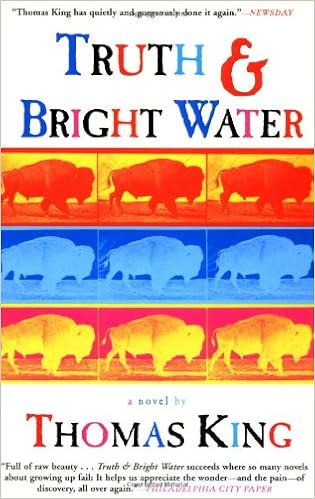
Onto the land of black gold. The book I read for this province was Truth and Bright Water by Thomas King, about the life of a young Aboriginal boy and two towns on either side of the US/Canada border. While doing this challenge I also read a lot about and the stories of Aboriginal people. I always find it interesting reading Aboriginal stories, because the way Aboriginal people think is very different from the way I think. Truth and Bright Water was an easy read, and fairly humorous despite one of the characters constantly saying that what's wrong with Indians is they have no sense of humor.


SASKATCHEWAN

I had so much trouble finding books set in SK. The province has such a tiny population, so there's only a small percentage of published books about it written by Canadian authors and whose books I actually have access to. I ended up reading Dust by Arthur Slade, which was a younger YA about a weird magician-like person who puts a spell on a town in Saskatchewan during the Dust Bowl. I think this book was just a bit too young for me to enjoy. It was weird thinking of Saskatchewan during the Dust Bowl as a place for magic to happen, though.


MANITOBA

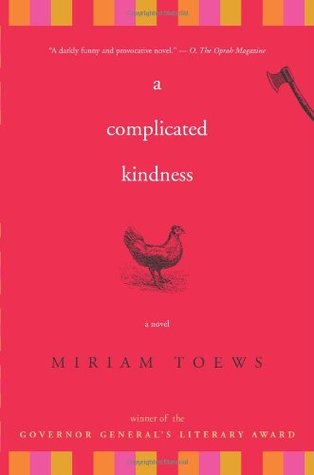
My home province! I read Louis Riel: A Comic Strip Biography by Chester Brown. If you don't know the name Louis Riel, well you should learn it. He's thought of as one of the founding fathers of Manitoba, although the actual history is a little bit less straightforward. That was the fun thing about reading this biography, is you realize just how not straightforward history is. Louis Riel was one weird dude, that's for sure. I also read A Complicated Kindness by Miriam Toews, who is a prominent Manitoban and Canadian writer. A Complicated Kindness is a story about a young girl growing up as a Mennonite and her struggle with her culture. Mennonite stories are a huge part of Manitoba, so it was interesting learning more about that culture.


ONTARIO

It is not hard at all to find books set in Ontario, considering that's where most of the population of Canada lives. I read The Unlikely Hero of Room 13B by Teresa Toten, which focuses on a young boy with OCD and his affection for a young girl in his group; Skim by Mariko and Jillian Tamaki, a short graphic novel about a Korean girl and her trials at school in Toronto, and Lies Beneath by Anne Greenwood Brown, a book about murderous mermaids who live in Lake Superior. It's an interesting concept, mermaids who live somewhere considerably less tropical and oceanic.


QUEBEC


For Québec, I read Cockroach by Rawi Hage which is about an immigrant making his way in the diverse community of Montreal. It was very much about the difficulties of being a Canadian immigrant. It's interesting because a lot of the time in the news and stuff you read about all these happy ending Canadian immigrant stories, that Canada has rescued these people and Canada's so great and welcoming and multicultural and all that. But this book, as well as Drive-by Saviours, shows a very, very different experience of Canadian immigration, one that people don't hear about as often, but is nonetheless still true to the experience.


NEW BRUNSWICK
 

I read a short book called Summer Point by Linda Mcnutt, which was about the longstanding effect of staying at a cottage for one summer in New Brunswick on one woman's life. The writing was very subtle, which I liked, but I felt like it could have gone into a lot more depth with the characters. It was just too short of a book to really flesh out the character's and their stories. I did enjoy the short story that I did get to read, though, it was well-written and the story flowed quite well.


NOVA SCOTIA

One thing I noticed when trying to find books set in the Maritimes is how many books set there are historical fiction. The Birth House by Ami Mckay was a historical fiction novel about a midwife set in the early twentieth century. It was mainly a novel about women's rights, especially in regards to giving birth. It also touched on the theme of white men coming in and taking over and ignoring the voices who know better in order to give something that they think is better but really isn't, which is a common theme in a lot of the books I've read. But I felt like it was too obvious what the author was trying to say, and it came off kind of preachy. I think truths in fiction need to be more subtle.


PRINCE EDWARD ISLAND

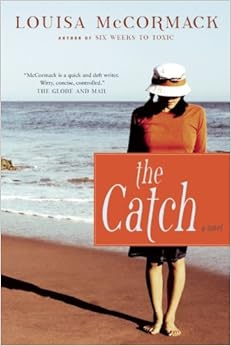
I read an adult romance book called The Catch by Louisa Mccormack, about a middle-aged business
woman finding herself by spending a summer in a small town on PEI. It wasn't a bad read, but I didn't feel like the main character really learned anything by the end which was disappointing. My favourite part was definitely the small town PEI atmosphere of it. I loved how the story of family and friends and neighbours who all know each other was at the heart of the book.


NEWFOUNDLAND AND LABRADOR

I read February by Lisa Moore for this province, about a woman dealing with her husband's death. It was also tied in with the story of her son getting some girl he met in Iceland pregnant and trying to avoid doing what his mother thinks he should do. It was okay, but it was just too slow for me. There were too many details that felt unnecessary to me, and that didn't really give any greater insight into the characters or story.

Well, that's it for the provinces, stay tuned for tomorrow, when I'll go over the books I read set in the North: Yukon, Northwest Territories, and Nunavut!


Monday, July 6, 2015

5 TBR List Tips

A few weeks ago I was talking to one of my friends, trying to convince her to add a bunch of books to her TBR list, as well as follow a whole bunch of bookish Twitter accounts. She made a comment on how if she did that, her TBR list would be way too long because she would just add everything.

I follow hundreds of websites and bookish people, so my Twitter and Tumblr are always brimming with book recommendations. It could be overwhelming if I just added every book rec I saw to my TBR (to be read) list. (Just for clarification, my TBR list is not a stack of books next to my bed, but a Word document where I write any books that I might be interested in reading. I know some people have a literal, physical TBR.)

Over the years I've learned it's better not to just add every book I see anywhere to my list, because it would be super long and I wouldn't even end up reading most of the books on it. I've come up with a few rules for myself, and I thought I'd share them with you and hopefully it'll help if you ever feel overwhelmed by the amount of book recs you come across. I know it doesn't really matter since a TBR list is basically just a way to record recommendations you've seen, but I feel like the pickier you are about the books on your TBR list, the more likely it is that you'll end up enjoying the books that you do end up buying, or borrowing from the library.


ALYSSA'S TBR LIST TIPS

1. Read summaries, and only add books if they sound interesting to YOU. It does not matter how many places you have seen the book, or if it's been on X or Y or Z bestseller list, if it doesn't sound like something you'd read, just skip over it. I get way more excited about borrowing the books on my TBR list if they already sound interesting to me. I know sometimes it's really hard not to get drawn in by hype, but everyone's reading tastes are different, and if a book isn't catching your attention, just let it go.

2. Add diverse books! Make sure your TBR list is not just full of books about white, able-bodied, etc characters that live in the same country as you. It's important to read about characters who live different experiences than you. If you have trouble finding diverse books, there are a TON of resources out there. You can start with We Need Diverse Books, Disability in Kidlit, Rich in Color, and DiversifYA. I'd also suggest following them Twitter or Tumblr, because it's an easy way to be constantly seeing diverse recs in your feed. If you're looking for books about specific people, Goodreads listopia is a great way to find diverse recs. Also check out the #weneeddiversebooks and #diversereads hashtags.

3. Cull your TBR list. If you've had a book on your list for years and years, maybe it's time to take it off and admit you will probably never read that book. I have books on my TBR list from years and years ago, and since then my tastes have changed quite a bit. There's no point in keeping books on there I know I'm never going to read. This goes for people who have physical book stacks for their TBR too. If you know you're not going to read a certain book, give it away or trade it with someone.

4. I've also just recently started putting a one word explanation for why I added the book to my list. Often I go back to my list months later before I'm going to the library and I completely forget what the books are about, since I only write down the title and the author. It's kind of annoying to have to go look them all up on Goodreads again, so now I just give myself a reminder of why I added certain books to my list.

5. Be open to new things. While it's important to create a TBR list geared to your interests (it is YOUR list, after all), it is also important to keep an open mind about the kinds of books you read. Read outside your genre, maybe try a book that's been hyped up that you don't think you'd like, read a book that a close friend recommended you that is WAY out of your reading comfort zone. Sometimes when you read out of your comfort zone, you end up being pleasantly surprised!

How do you create your TBR list? 


Friday, July 3, 2015

CanLit Reviews: Drive-by Saviours by Chris Benjamin

If you've followed my blog for any amount of time, you'll know that I love reading books that make me think. I love books that stretch my brain and make me step outside of my own world to consider someone else's. Drive-by Saviours accomplished that excellently. In fact that was kind of what I felt the book was about, people learning to consider other people's stories. 


The book centres around two characters. One is Mark, a white Canadian living in Toronto who finds everything in his life mundane from his social work job to his partner, and who used to want to save the world but is now stuck in a rut. The other part of the story is the life of Bumi, whose story begins when he's a young boy on a small island in Indonesia and follows him through all his struggles into adulthood. As you could probably guess, the paths of the two men meet when Bumi immigrates to Canada.

The stories of both characters are told eloquently and incredibly carefully. There are a lot of scenes or chapters that seem to be out of place in the moment, but come to fit smoothly into the story later on. The writing is incredibly concise and captivating, and the clever twists of words enraptured me with each character's story. The places as well as the characters come alive through the author's writing.

Just listen to this description of Ottawa in one of Mark's chapters:

"The city that never wakes up, which has no culture, houses the highest bureaucrat-per-capita rate outside Geneva, has the seventh coldest winter temperatures of any nation's capital, bans alcohol after midnight and litter before, smells like carbon monoxide and feels like ether, celebrates smog and humidity with the bland cultural products of Canadian content law and draws more people for its tulip festival than any other event, is the city that produced the woman I loved."

Of course the main thing I thought about throughout this entire book is, how do these stories even connect? Even after Bumi and Mark met I kept trying to figure out what the two characters were learning from each other. A lot of the time it seemed like nothing, although of course that may have been the point. 

The commentary on social issues relating to immigration, development and modernization was great. You can see through Bumi's story how he is affected by the do-good attitude of outsiders his entire life, and how that destroys him. Then on the other side is Mark, the example of the wannabe social justice warrior and almost accidental white saviour figure. Not only do the themes of the book focus on the various trials and realities of immigration to Canada, but also the ups and downs and missteps of development work. Mark feels unfulfilled his entire life because he feels he's not helping people enough, and then when he meets this downtrodden immigrant he wants to help him for all the wrong reasons.

I find all of this stuff fascinating, probably because of my interest in international and cross-cultural development. But I'd really encourage you to check out this book. Not only is it a fascinating cross-continental story, but it touches on important and current issues. Even if it is fictional, I'm sure the stories reflect the situations of many real Canadians. (Also you should read it because I really want to discuss it with someone).

Find it on Goodreads here.
Amazon.ca
Amazon.com
Chris Benjamin's website 
Chris Benjamin's Twitter 

Monday, June 15, 2015

Je reviendrai, Québec

Salut, tout le monde! 

Well, I am back home from my five week French immersion program in Québec. It was an amazing experience, but I am also glad to be back home, where everyone speaks English and where the landscape is ridiculously flat. Dorothy was right when she said there really is no place like home. 

I thought I'd just take some time and talk up the program I did. The program is called Explore and is offered through the Canadian government. Anyone can do it (there were a few Americans in my program) but only Canadian residents are eligible to receive the bursary that pays for everything except your transportation. If you're Canadian, I would definitely suggest doing it. Your entire 5 week trip only costs whatever your flight/train/bus/gas costs, and you get to learn French! Even if you're not Canadian, you can still do the program, you just have to pay. 


Explore is an awesome program for improving confidence in French, especially oral. There was a lot of focus on speaking French. We had classes where we're encouraged to talk, conversation classes, and activities with the animateurs (the hosts who are native francophones) so we get to talk to francophones. The best thing about the hosts is that it's their job to be patient with you as you learn French. It's a great environment, because you get to feel comfortable talking and practicing with the animateurs, and then you can go out and talk to francophones in the city!


A hike to Cap Tourmente with students and hosts!
 There are Explore programs all across Canada, both English (for francophones) and French (for anglophones), but the one I went to was at Université Laval in Québec City. I can't really judge since I've only been to one program, but I honestly think the Laval program is the best. Laval is a bigger university and has been doing language exchange programs for years and years, so their program is super organized. They have a big focus on making you speak French, so you learn a lot in the 5 weeks. We were given bracelets the first week that identified us as either beginner (blue bracelet), intermediate (red), or superior (yellow). I was amazed at how much people with blue bracelets learned. At the beginning, they knew a few words, and by the end they could hold entire conversations! 

I was a red bracelet, so I could understand fairly well and speak enough to get by, but I definitely noticed an improvement in my own French as well. By the end, I could understand pretty well and felt like I could communicate well enough to get by living in Québec. The biggest thing though was definitely building up confidence. One of my friends commented on how her confidence had improved more than her actual ability to speak well, and she summed up it by saying, "They're going to hear my French whether they like it or not!" This is a great attitude to have if you want to learn a language, because you have to use it in order to practice and get better. And if you're too scared to use it, well that's not going to get you anywhere. 


Saturday hike to Mont du Lac des Cygnes, with the most incredible views.
The program itself at Laval is very strict about making you speak French, so it's an awesome environment to learn. The other thing is that the Québecois in Quebec City don't always automatically switch to English if you speak to them. Sometimes people switch, but a lot of people acknowledge your effort and the fact that you're trying to practice and will keep speaking French to you. There were were only a handful of people that spoke back to me and my friends in English when we spoke French to them. That's just another reason to go to Québec City if you really want to learn French, rather than Montreal or anywhere outside of Québec. 

Another reason to go to Laval is because there is a ton of stuff to do in Quebec City! There are some Explore programs at universities in smaller towns, but there is not as much to keep you entertained during your free time in afternoons or on weekends. The Université Laval campus is surrounded by malls, shops and little streets with cafés and cute little trinket shops. It's also about a fifteen minute bus ride from Old Quebec, the main tourist attraction, and the main metro bus goes right through the university so it's super easy to get around the city. 


One of the optional afternoon activities - painting!

The Laval Explore program itself organizes tons of activities. They have activities either at the university or around the city every afternoon, as well as a choice of three outing activities every Saturday. If you go on these activities with the university, that are led by the hosts, you get the chance to speak French even more. Sometimes it was difficult hiking up a mountain while also trying to speak French, but it was fun! 

I did the spring session (May-June) but they also have a summer session (July-August). If you are interested in going to Université Laval or doing an Explore program, I would love to chat with you or give you advice on what to expect or what to do in Québec City. Even if you're reading this months after it's posted, leave a comment, shoot me an email at asherlockwrites(at)gmail(dot)com or contact me on Twitter @asherlockwrites!

Saturday, May 23, 2015

On Being A Second Language Learner

Bonjour! 

I say that because currently I am in Quebec! I am here because I'm doing a 5 week French immersion program that the government provides bursaries to Canadian students for. (If you're interested, you can find more information at www.myexplore.ca). In the program, you go and stay at a university (or with a host family if you want), take classes, and participate in French activities and outings around the city. We also are required to try to speak French all the time. And the program I'm in in Quebec City, you get warnings if you get caught speaking English, which can lead to you being kicked out of the program. It makes sense, since the government is paying for you to be here to learn French.

Anyway, as I've been learning, I've learned a lot of things about being a second language learner, so I thought I'd share them with you.


1. It is EXHAUSTING. It is really hard to speak a language that is not my mother tongue all the time. It takes extra effort to concentrate on understanding people, and it takes a lot of effort to be able to find the right way to say something. It's so much easier just to slip back into English. I now understand why one of my friends who was learning language would always be falling asleep in the car. He was just exhausted from trying so hard to keep up with everyone!

2. I probably sound stupid, even though I'm not. I know I'm using the wrong tenses or words or orders of words all the time, but I'm just trying to do my best to communicate in the best way I can. I do know how to express complex ideas and carry on interesting discussion, just not in French.

3. I feel like it is impossible to truly get to know me if you only speak French with me. At times when I would talk or add to the discussion in English, I don't in French because I don't know how to say certain things, it would just take way too long for me to say it, or I didn't fully understand what was said in the first place. I almost feel like there is this wall of fog separating me and francophones. I can kind of see through the fog, but only enough to understand general ideas and not every word. My understanding of others isn't complete enough to have the wall break down. 

4. You can never become a native speaker. I know this should be obvious, but I didn't quite realize it before. I never realized how even if you become fluent and capable in another language, you will probably still have an accent, and you'll just be missing essential knowledge about the other language that native speakers just take for granted. When I reflect on how I speak and use English, there are so many things I do that I don't realize or that would be impossible or at least really difficult to learn.

5. It is necessary to get outside the classroom. There are so many things you learn "sur la terrain" (on the ground) that you can't or won't learn in a classroom. Also, writing and being able to read only get you so far. There's slang, expressions and ways of speaking that you'll only learn by talking with someone who speaks that language.

6. While you can never get on the level of native speakers, if you have people around you that are willing to help teach you and support you in your learning and speaking and who don't make fun of you (too much) when you make mistakes, then you can learn another language!

So, those are just some things I've realized, and also help me to empathize with my friends whose mother tongue is not English. I definitely understand their experience a bit better now. I think I'm very spoiled as an anglophone, because most people in the world speak English, I could get away with only speaking English my entire life. However, I think it's almost a conceited way to go through life, expecting and wanting everyone to speak English just so it's easier for you. Not that I think that way, but I know there are some people who do, even people whose mother tongue isn't English. I wish that English hadn't taken over the world, because I think other languages are important and should be conserved and protected. Anyway, that's a big part of the reason why I want to improve my French, because I think it's important to learn other languages and the culture that goes with it.

What languages do you know? How have you found it learning another language?

Thursday, May 7, 2015

The Book Faeries

 I believe it started when my 19-year-old brother said that he could finish absolutely any book. Offhandedly I said, "What about one of my YA romances?" And he shrugged in his typical style and said sure. So half as a joke, half knowing he would actually read it, I put my copy of Anna and the French Kiss by Stephanie Perkins on his pillow. And he read it. Despite being infuriatingly lazy and interested in math instead of writing, my brother has a few redeeming qualities. Such as, he reads quite widely and doesn't feel any shame about toting my bright blue, cutesy copy of Anna and the French Kiss around. Of course this did attract attention, so my brother explained to people inquiring how I'd challenged him that he wouldn't be able to finish the book. While he was reading it, my parents scoffed and said, "I bet I could give him a book he couldn't finish."


He did finish Anna and the French Kiss, and while he said that it was "not as bad as I thought it would be", he didn't really enjoy it, which is understandable given his interests. I like to think that the fact that it wasn't as annoying as he'd thought is a testament to Stephanie Perkin's writing skill, rather than my inability to give my brother a book he couldn't finish.


My little brother. Photo Credit: Alan Sherlock
Anyway, somehow it got to the point that we now have a cycle where each member of my family (except my sister) takes turns giving my brother a book to read. It went from giving my brother books he might not be able to finish, to just giving him books we liked and wanted him to read. It's quite enjoyable on both sides. My brother likes it because he gets a stream of books literally handed to him that have gone through an excellent filtering process. He never really has to read a horrible book, because they've already been screened by us. And my parents and I get to make my brother read books that we like and want other people to read. (Note: we did ask my sister if she wanted to be included in the cycle, but the only recommendation she ever had was Lemonade Mouth).


So after my brother finished Anna and the French Kiss, my dad gave him Men of Mathematics by E.T. Bell. I tried to interview my brother about what he thought of each of the books he's been given so far, but something to know about my brother is that he doesn't really talk a lot (whether it's because he actually has nothing to say or is just trying to annoy me is undetermined). So he said Men of Mathematics was "good" and when I asked him if he learned anything he said he "learned math".

After the math book, my brother was given The Immortal Life of Henrietta Lacks by Rebecca Skloot by my mom. This he also said was "good", and that the one thing he'll remember forever from this book is that it is weird that people ship cells in the mail. 

Then it was my turn again, so I gave him Seraphina by Rachel Hartman. He said it was good. When I tried to get him to elaborate on why it was good, he just said it was good because of "everything".

Dad's turn next, which meant back to non-fiction. He gave my brother Bully for Brontosaurus by Stephen Jay Gould. My brother said it was good, and one thing he learned was that there is a type of frog that is birthed by projectile vomiting. The egg grows in it's stomach and then it vomits it out, and it happened so fast that it took awhile for scientists to figure out what was actually going on. 

Mom's turn again, and she gave him The Power of the Powerless by Christopher de Vinck. Our sister has Down syndrome, so disability rights is something I think everyone in my family feels strongly about. My brother made a connection between some of the talk in this book about kids being put into institutions, and the images of insane asylums that are presented at the beginning and end of the movie Amadeus.

Then it was back to me again, so I gave him The Secret History by Donna Tartt, which he actually just finished. I found this book really fascinating and it made me think about so many different things, which is why I gave it to my brother to read. One of his comments was that he thought it was weird and unrealistic that the speech of various characters was very similar most of the time. He also commented that the book shows how easy it is to get away with murder, although it's easy in one way and hard in another. I was also talking about how the horror of the whole thing had caught me off guard when I read it, and he said that the way it's told, it seems very nonchalant about the horror. 

Then when he finishes The Secret History, it's my dad's turn, and we continue! My brother is pretty lucky that he has his own personal book faeries to pick out and give him books to read without him having to lift a finger. Perhaps we are only enabling his laziness, but it sure is fun. I love recommending books to people, and my brother is the perfect person to recommend books to because you know he'll read it, as long as you give it to him. It's also fun for us because then he gets to share in a little part of our interests and our worlds. We are connecting ourselves to each other, through our favourite books. Maybe soon we'll even have a family book club. Who knows? 

My brother isn't engaged in the online writing community, because his interests are more on the side of science and mathematics, so I can't plug him in that way. But he's actually in university for computer science, and has even made a couple of apps for android, which you can find and download here. 

Have a great day!


LinkWithin

Related Posts Plugin for WordPress, Blogger...